

Why Everyone Is Talking About AI-Powered Due Diligence (And You Should Too)
Due diligence has always been the backbone of smart investment decisions. But if you've ever been through a traditional due diligence process, whether as an investor, founder, or advisor, you know the pain points all too well. Weeks of document review, mountains of spreadsheets, and the constant fear that something critical might slip through the cracks.
That's changing fast. AI-powered due diligence isn't just a buzzword anymore, it's becoming the new standard for how sophisticated investors and venture studios evaluate opportunities. And the results are impressive enough that even the most traditional firms are paying attention.
The Traditional Due Diligence Problem
Let's be honest about what traditional due diligence looks like. Teams of analysts spending weeks combing through financial statements, legal documents, and market reports. Manual data entry. Subjective risk assessments that vary from reviewer to reviewer. And all of this happening under tight deadlines while deals hang in the balance.
The human element, while valuable, introduces inconsistencies and blind spots. One analyst might flag a regulatory risk that another overlooks entirely. Important patterns buried in thousands of pages of documentation go unnoticed. And by the time the analysis is complete, market conditions may have shifted.
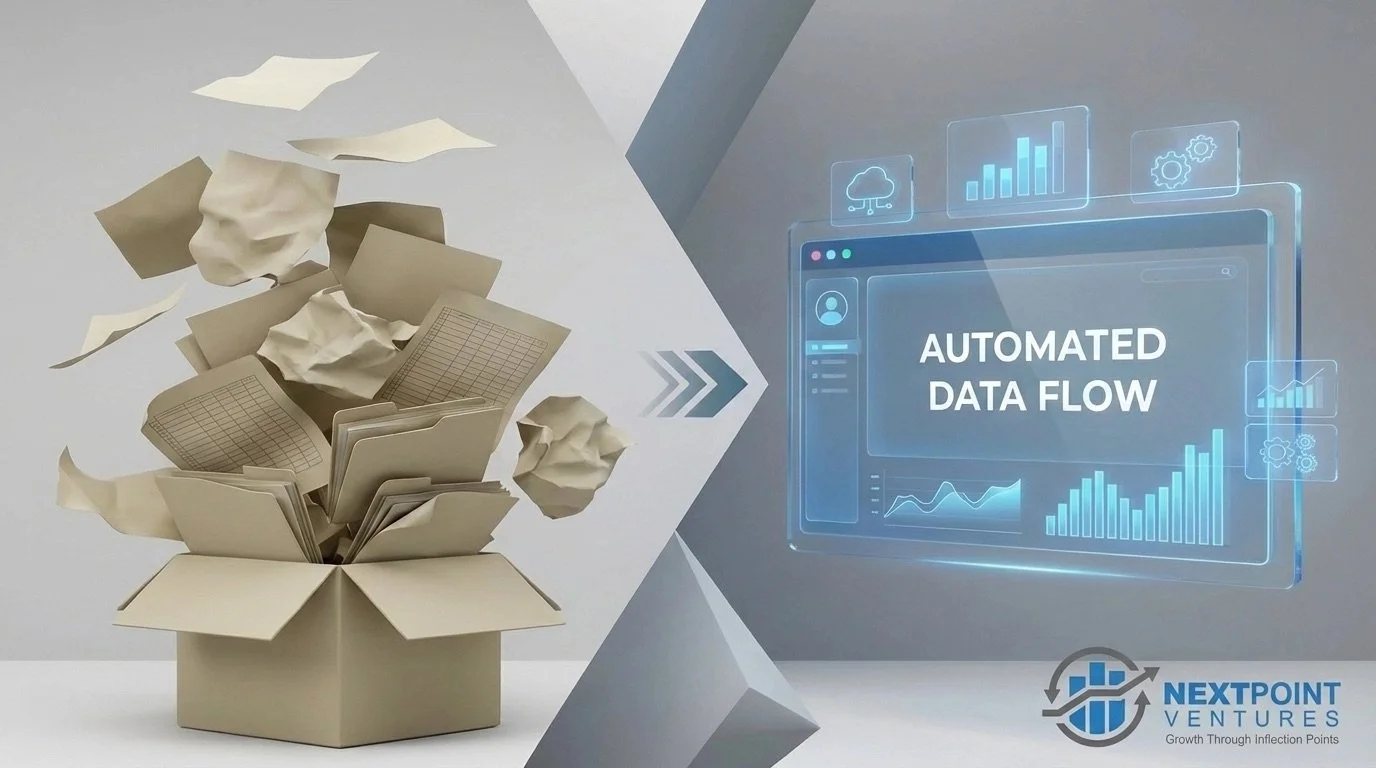
For venture studios like Next Point Ventures, which work closely with companies at critical inflection points, these inefficiencies aren't just inconvenient, they're costly. Missing key risks or opportunities can derail growth strategies before they even begin.
How AI Transforms the Due Diligence Game
AI-powered due diligence flips this entire process on its head. Instead of armies of analysts manually reviewing documents, machine learning algorithms can process vast amounts of structured and unstructured data in hours, not weeks.
The technology doesn't just speed things up, it fundamentally changes what's possible. AI systems can simultaneously analyze financial records, social media sentiment, regulatory filings, news articles, and market data to create a comprehensive risk profile. They can identify patterns and anomalies that human reviewers might miss, especially when dealing with complex, multi-jurisdictional deals.
Consider this: where a traditional due diligence team might review 500 documents over two weeks, AI can analyze 50,000 documents in the same timeframe, flagging potential issues and opportunities with remarkable accuracy.
The Numbers Don't Lie
The impact is measurable and significant. Organizations implementing AI-powered due diligence are seeing document review times reduced by up to 70%. That's not a marginal improvement, it's a fundamental transformation of how business gets done.
Error rates drop by 40% when AI handles compliance checks and risk assessments. For investment decisions where accuracy is paramount, this improvement in reliability is game-changing. When Merck partnered with McKinsey on AI-enhanced due diligence, they saw report preparation times cut by more than 50%.

But speed and accuracy are just the beginning. The real value comes from the depth of analysis AI enables. Machine learning algorithms can identify subtle correlations across massive datasets, uncovering risks and opportunities that traditional methods simply can't detect.
Beyond Faster Reviews: Continuous Intelligence
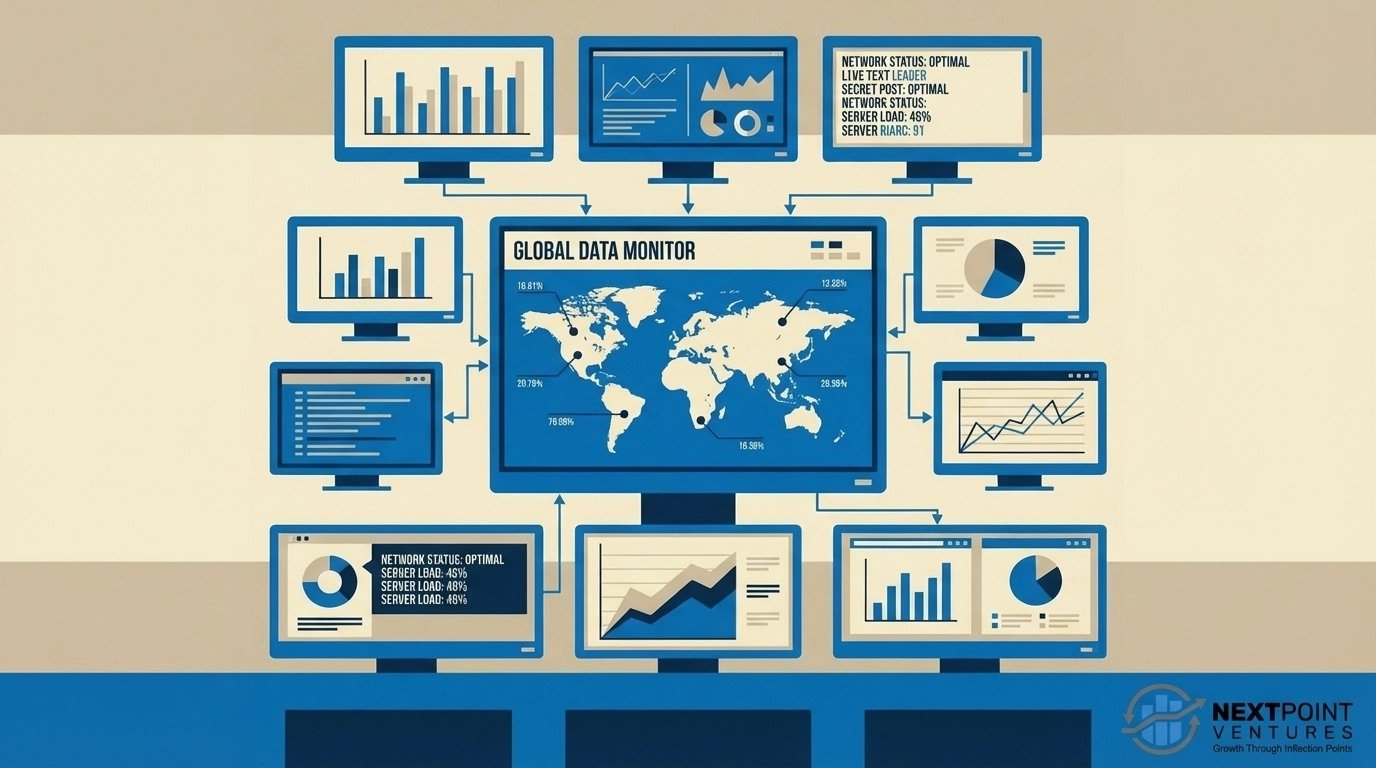
Perhaps the most significant shift AI brings to due diligence is moving from periodic snapshots to continuous monitoring. Traditional due diligence gives you a picture of a company at a specific moment in time. But businesses are dynamic, regulatory environments change, competitive landscapes shift, and new risks emerge constantly.
AI-powered systems provide ongoing intelligence, continuously updating risk profiles as new information becomes available. If a portfolio company faces new regulatory scrutiny or a competitor launches a disruptive product, AI flags these developments immediately rather than waiting for the next formal review cycle.
This continuous monitoring is particularly valuable for venture studios that maintain long-term relationships with their portfolio companies. Instead of relying on quarterly updates or annual reviews, they can track key risk indicators in real-time, enabling proactive rather than reactive management.
What This Means for Different Stakeholders
For founders and entrepreneurs, AI-powered due diligence can actually be liberating. Yes, the analysis is more thorough, but it's also faster and more objective. Instead of weeks of uncertainty while investors review materials, decisions happen quickly. And because AI identifies specific areas of concern, founders can address issues directly rather than guessing what might be problematic.
Investors and venture studios benefit from higher-quality decision-making data and the ability to evaluate more opportunities without proportionally increasing costs. AI enables more sophisticated risk modeling and better portfolio management through continuous monitoring.
Mid-market companies and established businesses gain access to enterprise-level due diligence capabilities that were previously cost-prohibitive. AI democratizes sophisticated risk assessment, making it accessible to companies at any stage of growth.
The Competitive Advantage Factor
Here's something that often gets overlooked in discussions about AI-powered due diligence: it's becoming a competitive advantage. Firms that can evaluate opportunities faster and more accurately while managing risks proactively are positioning themselves ahead of those still relying on traditional methods.
This is especially relevant in today's fast-moving markets where the best opportunities often go to the fastest decision-makers. When two similar investment opportunities emerge, the firm that can complete thorough due diligence in days rather than weeks has a significant edge.
Implementation Realities
Of course, implementing AI-powered due diligence isn't without challenges. The technology requires significant upfront investment in both software and training. Teams need to learn new workflows and trust automated systems for decisions that traditionally relied on human judgment.
But the firms making this transition now are discovering that the learning curve is manageable, and the benefits compound quickly. Early adopters are processing more deals, making better decisions, and managing risks more effectively than their competitors.

The key is choosing the right implementation approach. Some organizations try to build AI capabilities in-house, while others partner with specialized providers. The most successful implementations typically combine AI automation with human expertise, using technology to handle data processing and pattern recognition while relying on experienced professionals for strategic interpretation and decision-making.
Looking Forward: The Future of Risk Assessment
AI-powered due diligence represents just the beginning of how artificial intelligence will transform risk assessment and investment decision-making. As machine learning algorithms become more sophisticated and datasets grow richer, we can expect even more dramatic improvements in accuracy and speed.
Predictive analytics will become more reliable, enabling investors to forecast not just current risks but future scenarios. Natural language processing will make it easier to extract insights from unstructured data sources. And integration with other AI-powered business tools will create seamless workflows from initial screening through post-investment management.
The question isn't whether AI will become standard in due diligence: it's how quickly organizations will adapt to this new reality. The firms and founders who embrace these technologies now are positioning themselves for success in an increasingly competitive and fast-moving business environment.
For venture studios like Next Point Ventures, which pride themselves on providing comprehensive support to growing companies, AI-powered due diligence represents an opportunity to offer even more sophisticated guidance and risk management. It's not just about making better investment decisions: it's about helping portfolio companies navigate complex challenges with better data and deeper insights.
The conversation around AI-powered due diligence is happening for good reason. The technology delivers measurable improvements in speed, accuracy, and decision-making quality while enabling new levels of continuous risk management. Whether you're raising capital, making investments, or advising growing companies, understanding and leveraging these capabilities is becoming essential for staying competitive.