

Struggling For Growth Capital? 50+ Alternative Financing Examples Beyond Traditional VC
Traditional venture capital isn't the only game in town: not even close. While VCs dominate the headlines, smart companies are increasingly turning to alternative financing sources that offer more flexibility, better terms, and faster access to capital. Whether you're a bootstrapped startup or an established mid-market company, the financing landscape has evolved dramatically over the past decade.
The numbers tell the story: private credit markets have exploded past $1.7 trillion globally, secondary markets are projected to exceed $210 billion in 2025, and companies are staying private longer while accessing larger funding rounds than ever before. This shift has created opportunities that didn't exist even five years ago.
Let's dive into the comprehensive menu of financing alternatives that could be exactly what your business needs.
Private Debt and Credit Solutions
Direct Lending and Corporate Credit
Private credit has emerged as one of the most significant alternatives to traditional equity financing. Unlike venture capital, these solutions don't dilute your ownership: they provide debt capital with predictable repayment terms.
Direct lending from private credit funds
Corporate direct lending for established businesses
Senior secured credit with asset backing
Unitranche financing combining senior and mezzanine debt
Asset-based lending secured by inventory, receivables, or equipment
Revenue-based financing tied to monthly revenue streams
Equipment financing for specific asset purchases
Invoice factoring for immediate cash flow
Supply chain financing for working capital needs
Bridge loans for short-term capital gaps
Mezzanine and Hybrid Solutions
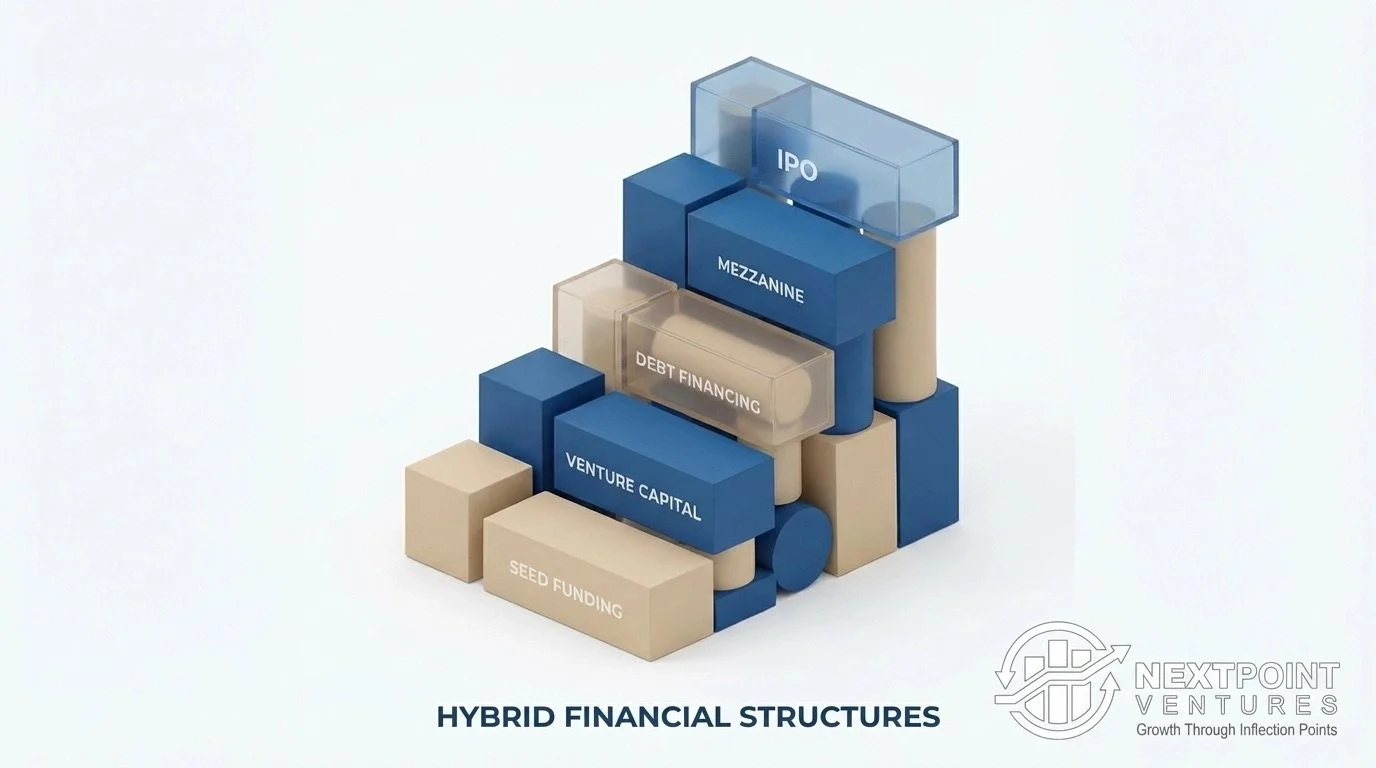
These financing types sit between debt and equity, offering more flexible terms than traditional bank loans while avoiding the high dilution of equity rounds.
Mezzanine financing with equity kickers
Convertible debt with future equity conversion options
Preferred equity structures
PIK (Payment-in-Kind) notes
Subordinated debt with higher yields
Alternative Equity Structures
Growth Capital Beyond VC
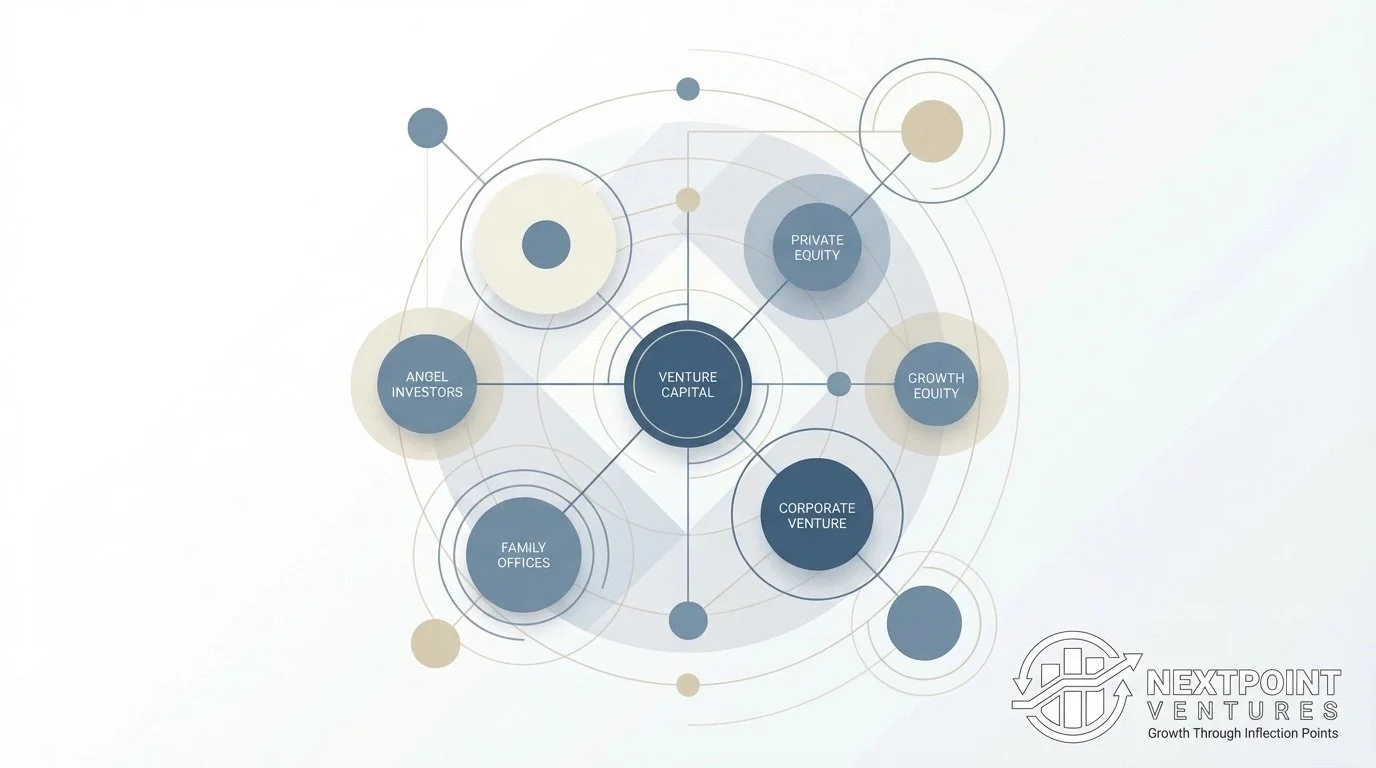
Growth equity has become increasingly relevant as companies scale beyond the typical VC sweet spot. These investors focus on established businesses with proven revenue streams and clear paths to profitability.
Growth equity from specialized funds
Private equity buyouts for established companies
Family office investments with patient capital
Strategic corporate investments from industry players
Sovereign wealth funds for larger deals
Secondary market transactions for existing shareholders
Employee stock ownership plans (ESOPs)
Management buyouts (MBOs)
Leveraged recapitalizations
Real Estate and Asset-Backed Options
For businesses with significant real estate components or asset-heavy models, these financing sources can provide substantial capital while leveraging existing assets.
Commercial real estate loans
Sale-leaseback transactions on owned properties
Real estate investment trusts (REITs) partnerships
Hard money loans for quick real estate acquisition
Construction-to-perm financing
Ground lease arrangements
Real estate crowdfunding platforms
Alternative Platforms and Marketplaces
The democratization of capital markets has created numerous platforms that connect businesses directly with investors, bypassing traditional intermediaries.
Peer-to-peer lending platforms
Online marketplace lending
Equity crowdfunding platforms
Initial coin offerings (ICOs) and token sales
Security token offerings (STOs)
Real estate crowdfunding platforms
Art and collectibles financing
Commodity financing arrangements
Government and Institutional Sources
Often overlooked, government programs and institutional sources can provide significant capital at attractive terms, especially for businesses in specific industries or geographic areas.
SBA loans and government-backed financing
State and local economic development programs
Export-Import Bank financing for international trade
USDA rural development programs
Small business investment company (SBIC) funding
New Markets Tax Credit projects
Opportunity Zone investments
R&D tax credits and grants
Industry-specific grants and incentives
Specialized Industry Solutions
Certain industries have developed their own unique financing ecosystems that can provide capital in ways that traditional sources cannot.
Healthcare receivables financing
Pharmaceutical royalty investments
Entertainment and media financing
Energy project financing
Agriculture and commodity financing
Technology licensing arrangements
Intellectual property monetization
Strategic Considerations for Alternative Financing
Timing and Market Conditions
The current market environment heavily favors alternative financing sources. With traditional VC becoming more selective and valuations under pressure, many companies find better terms and more flexible structures through alternative channels.
Private credit offers predictable costs and timeline certainty that equity rounds simply can't match. When you need to close financing in 30-60 days rather than 6-9 months, debt solutions often provide the speed and reliability that growing businesses require.
Cost of Capital Analysis
While alternative financing might appear more expensive than traditional equity on the surface, the true cost calculation is more nuanced. Consider the dilution factor: giving up 20% equity in a traditional VC round could cost significantly more than paying 10-15% interest on debt capital, especially if your business is growing rapidly.

Operational Flexibility
Many alternative financing sources provide more operational flexibility than traditional VC. Revenue-based financing scales with your business performance, asset-based lending grows with your asset base, and debt financing doesn't come with board seats or operational restrictions that can slow decision-making.
The Next Point Ventures Approach
At Next Point Ventures, we've seen firsthand how the right alternative financing can accelerate growth while preserving founder control and equity value. Our Solution Stack approach often incorporates multiple financing sources to create optimal capital structures for our portfolio companies.
The key is matching the financing source to your specific business model, growth stage, and strategic objectives. A SaaS company with predictable recurring revenue might benefit from revenue-based financing, while a manufacturing business might find asset-based lending or equipment financing more appropriate.
Making the Right Choice
The explosion of alternative financing options means that virtually every business can find capital sources that align with their specific needs and growth trajectory. The challenge isn't finding capital: it's selecting the right combination of sources that optimize for cost, flexibility, and strategic alignment.
Success in today's financing landscape requires understanding these alternatives, evaluating them against your specific situation, and often combining multiple sources to create the optimal capital structure. The companies that master this approach will have significant advantages over those that rely solely on traditional venture capital.
The financing world has evolved beyond recognition from just a decade ago. Smart entrepreneurs and business owners are taking advantage of this evolution to fuel growth on their own terms, with better economics and more control than traditional financing ever offered.

Ready to explore which alternative financing sources align with your growth objectives? The landscape is rich with opportunities: you just need to know where to look and how to evaluate them against your specific business needs.